Robert Östman, emergency medicine specialist at Helsinki’s Meilahti University Hospital and Porvoo Hospital, shares his journey to specialization and Finland’s EM training evolution since 2013. Inspired by Scrubs, he started at Porvoo (small ED, ICU module) post-2019 licensure, building confidence amid early mishaps like mishandling Frenzel goggles on a vertigo patient.
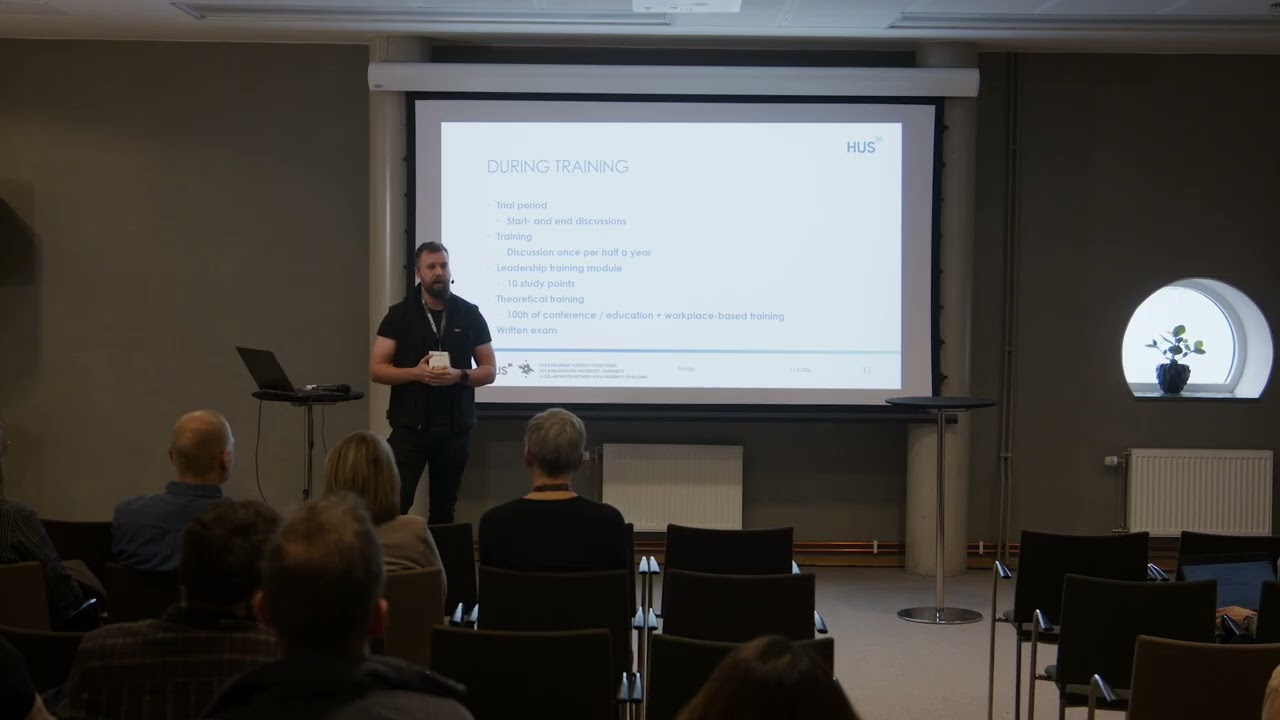
Finland granted 71 initial specialists in 2013 via experience and exams; now ~200 by 2024, with 5.5-year programs (now 5-6 years per European Curriculum) requiring prior clinical/research points, motivation letter, interview, and 6-month ED trial assessing motivation and basics. Post-2020 curriculum shift to competency-based: 7 EPAs (e.g., high-trauma, critically ill) at level 3+, evaluated via Mini-CEX, DOPS (e.g., intubation, chest tubes), CBDs—generating stacks of paperwork.
Mandatory rotations: 30 months adult ED (6 internal med, 6 surgical/trauma), 3 pediatrics, 6 anesthesia/ICU, 3 prehospital (1 operational ambulance), 9-month primary care. Östman’s path: Porvoo starter, Vasa (internal med, neurology, peds, anesthesia), land-based ambulance, Meilahti trauma/surgical/anesthesia. Continuous ED shifts maintain skills; 100 theoretical hours, ALS/ETC, weekly workplace training, leadership modules, exams.
As specialist, he supervises trainees, handles consultant roles in categorized shifts (anesthesia/internal/surgical/ICU), prioritizing criticals while collaborating. EM growth fills gaps from subspecialization, work-life balance (shorter shifts), and “pepparkakor” patients slipping specialties—EM catches undifferentiated cases holistically. Future: 24/7 EM staffing, no lines (all ED patients ours), better interdepartmental cooperation sans fights. Q&A covers trials, needs in small hospitals.